10 Rapid-fire Questions with symmetRE's CTO
Rapid-fire takes on AI doom, bad passwords, vibecoding, and why budgeting season is still the most exciting thing on his calendar.

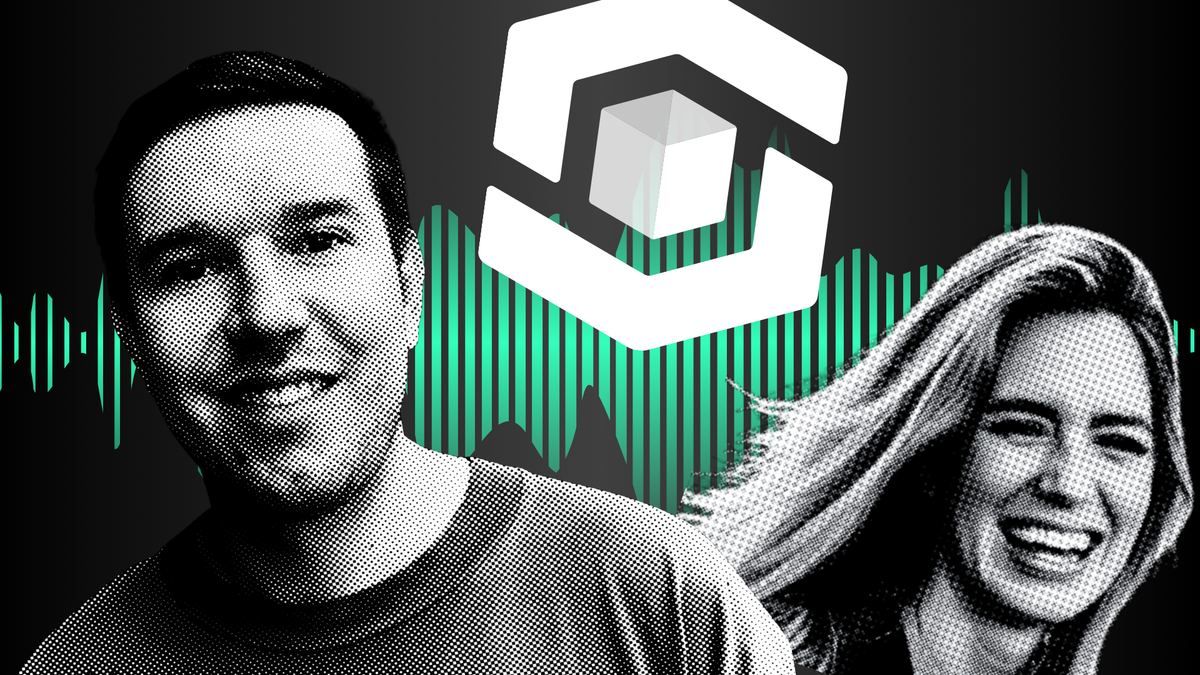
You know those Vogue "73 Questions with so-and-so" interviews, where Joe Sabia peppers [insert famous person here] with questions while walking through some dreamy estate? "On a scale of 1 to 10, how happy are you right now?" "What are you currently obsessed with?" "What's your favorite color?" ...Kind of like a celebrity edition of The Blair Witch Project where the guy behind the camera is really a five year old stuck in the "why" phase.
Well, this is not that.
But it is inspired by it.
I've been working in and around the Tech industry for the last 15 years and even in that short amount of time, I've witnessed a lot of change. Hardware. Software. Software-as-a-Service! Service-as-a-Software!! Enterprise. Premium. Freemium. AI (SI???) You get it.
At the risk of sounding trite: Things are weird right now. The news about AI feels like it was generated by AI. But it's not. I know what a human-in-the-loop is, but I am officially raising my hand to say that I have become a human-out-of the loop. So, instead of asking Google how long we've got left to live, I did the more responsible thing and...forced my CTO to answer as many questions as possible before he lost patience with me.
I couldn't get him to tell me about his skin care routine or what's "in his bag", but I think this turned out better.
Lindsay: Everyone’s bracing for the AI apocalypse: Skynet, mass unemployment, robots running the show. Are we actually building our own overlords, or is this just good content?
Artur Gaifutdinov: We're in real estate. People - and robots - will presumably still need somewhere to live. Matrix pods included.
What I can speak to is engineering, and the change is real. We investigate problems, build things, and make sense of unfamiliar information much faster. You can take something complicated and have it explained in a way that finally clicks. That's powerful. It can also make you feel like you're three prompts away from solving every problem in the business.
Then you discover how much depends on the information you started with. Wrong definitions, stale numbers, missing context - all of it still matters. The faster you can work, the more it matters to know what you're working with.
In real estate you can suddenly see the stale work orders, the move-out reasons, the leasing trends, and a hundred things somebody could act on. You address some, generate new information, and find the next hundred. Deciding what deserves attention becomes a bigger part of the job.
On unemployment, I honestly don't know. We're hiring and growing, but I wouldn't extrapolate from one company to the whole economy. What I do see is higher expectations around judgment, prioritization, and sharing context. Producing more work creates its own coordination problem.
And be deliberate about data. Connecting an AI tool to your business systems is a bigger decision than asking it to rewrite an email. What can it access? What leaves your systems? What gets stored, and for how long? Answer those before you set it up, not after.
I'm enjoying these tools. I'm also spending more time deciding what's worth doing with them.
Lindsay: Speaking of AI taking over the world: WTF even is "singularity," and should we really care about it?
Artur: Short version: the hypothetical point where AI becomes smarter than us and starts improving itself faster than we can keep up. The point where AI gets smart enough that thinking itself is outsourced. Machines improving machines, humans optional.
What I see on our own team is more immediate. We spend significantly less time writing code and much more time thinking: what to build, what the data means, which assumption is wrong. The typing got automated. The thinking got more valuable.
Should you care? My personal advice: don't worry about things you can't influence or control. Cliché, but it works.
Lindsay: No pressure, but what’s coming to symmetRE before the end of the year that you’re genuinely excited about?
Artur: Budgeting season. You can automate a lot of the preparation. People still have to agree on assumptions, priorities, and tradeoffs. It's human-to-human with a machine in the middle. If your engineers don't understand accounting, you feel it in the product, and no clever algorithm makes up for misunderstanding the business. What interests me is finding where software can take work off someone's plate, and where it has to help people reach a decision.
Anomaly detection is the other one. Finding an unusual number is only the beginning. You have to work out whether it matters, give someone enough context to investigate, and not bury them in things that turn out to be normal. You could spend a lifetime improving that.
Neither is primarily an AI project for us. Both depend on understanding the business and getting useful information to the people making decisions.
On the AI side: scheduled tasks and multi-step workflows. But the one I care most about is the cookbook. You don't start from a blank prompt. You pick a tested workflow for your question. Somebody already figured out which tools to call, in what order, and against which definitions. That's how one person's experiment becomes useful to everyone else.
We have nearly 30 people on the product team now, better tools, and a lot of enthusiasm. I'm excited about what that lets us deliver.
Lindsay: Give us one piece of advice for someone who opened an AI tool for the first time yesterday.
Artur: Definitely build everything in-house now. You're unstoppable!
Seriously though, start with a problem you understand well enough to check whether you’ve actually solved it.
Automate something tedious. Extract something useful from a PDF. Build a small tool you’ve wanted for years. Getting something you made to work is a great feeling. Engineers have been enjoying that for decades, and now many more people can experience it without spending months learning the setup first. I think some of them will discover they want to build things full-time.
The skill develops through doing it: learning what context to provide, recognizing when an answer is wrong, and figuring out why something broke. Having access to the tools gives you a place to start.
As more people depend on what you build, the responsibilities grow. You have to think about their data, permissions, failure cases, and what happens when the person who built it goes on vacation. AI helps with that work too, but somebody still has to understand it and own it.
Enjoy making the first version. Then learn what it takes to keep it working.
Lindsay: You said engineers "have been enjoying that for decades, and now many more people can experience it". Does any part of you (or your team) judge people when they start calling themselves an engineer after "vibecoding"?
Artur: Judge, no. Distinguish, yes. Designers have been building prototypes forever. Even before AI they were really nice prototypes: you could click through them and it felt like a real product. Today they can ship something close to production-grade code. Close, but there's more work before people can depend on it every day.
For me, engineering is a way of thinking. Structured, methodical, explainable. One wrong assumption can lead to a serious mistake, and an engineer can lay out their reasoning step by step, so when you correct that assumption, they immediately see what else it breaks. That's what a CS degree, and to an extent any STEM degree, trains into you. It's years of practice, not talent. People without that background are perfectly capable. They just haven't put in the reps yet.
So call yourself whatever you like. The real test is what happens when it breaks.
Lindsay: You touched on access and data questions for AI tools. But scams are legitimately so good I'M falling for them. This topic is bigger than what your AI can "see". And deeper than just worrying about security at work. What do you actually tell your friends and family to stay safe right now?
Artur: With consumer AI, you can end up paying for the privilege of training somebody else’s model with your own data. The business model underneath most of the internet hasn't changed in twenty years: it's ads or sentiment. I'd be surprised if this generation of tools turns out to be the exception, and if the data isn't used for marketing now, I'd expect it later. Structurally, it's also a great surveillance tool.
We've been here before. People googled things they'd never say out loud. They dragged files into random websites to turn a PDF into Excel. What's new is the scale. From my conversations, most people don't mind sharing personal stuff with these tools, and I think we all under appreciate the leakage risk. Myself included. I've asked plenty of dumb and personal things.
So my advice is simple: you either share your data or you don't. Assume anything you type is kept, and decide accordingly. The less of your life sits in someone's chat history, the less there is to expose if that history leaks.
It's also why I think privacy-first and self-hosted models become the prevalent choice, and why businesses will move toward vendors that guarantee their data is truly theirs.
Lindsay: What’s something in AI or tech that everyone’s currently obsessed with that you think is total BS?
Artur: The assumption that adding AI automatically makes a product better. Scheduled tasks are a good example. I'm excited when someone acts on the result. Produce an answer every day that nobody reads, and congratulations: you've built a recurring compute bill.
Build-versus-buy is the other one. Guess how many tools we've rebuilt ourselves just because we now have AI? Zero.
We pay for software our engineers could build versions of. Sometimes versions better suited to our specific needs. We still don't, because the economics don't make sense.
Engineers know this temptation well. New language, new framework: let's rewrite everything. Now AI makes the first version faster, and everybody's having the same thought. But software is an ongoing maintenance routine. Integrations break. Requirements change. People need support. Adding another system we have to maintain for our own internal users? No thank you.
Sometimes building makes sense. But "we can build it" isn't much of a business case. Are we saving someone time? Helping them make a better decision? Shipping something more reliable? That's what I care about.
Lindsay: Tech has a trend cycle like anything else. We have folding smartphones now! Is there a piece of tech that should've stayed dead? Or one you're quietly hoping comes back??? Walkman, iPod, flip phone?
Artur: What I'm quietly hoping for doesn't exist yet. Back to the Matrix thing - I’ve been pitching this for years, and anyone who knows me is laughing right now. Standing desk or sitting, your neck is done after a long shift. Now imagine an actual liquid pod. Something like a Vision Pro over your eyes, an underwater keyboard, nutrients straight into your veins. The ultimate vibe coder. Sci-fi crews do it on every multi-light-year trip. Half-joking, but I’m sure there’d be demand.
And one I’d happily see die: fitness trackers. Staying physically and mentally well is part of the job. I just don’t need a watch to tell me. I run without any devices at all. Staring at your pulse means you’re not paying attention to where you are. You either run or you don’t.
Lindsay: Do engineers feel like their work is an "art"? What i mean by this is: if you do math on a calculator but don't understand the formulas, can you call yourself a mathematician? In other words: if engineering is less and less about the coding, what is the job really?
Artur: Love the analogy. And no. Every mathematician I know can explain the logic underneath pretty much anything. Math stacks: you can't move forward without understanding the level below.
Software engineering is about finding the right abstractions, serving multiple business use cases with the same code. Then you compromise between speed of delivery, quality and security, and cost. That's the reason SaaS exists: you build once for a segment of businesses with the same problems, because building a quality solution for each one separately would cost too much time or money.
That's the real gap with vibe-coded solutions. The job is knowing which tradeoffs you made. "Hey look, it works" without knowing why is like renovating a building without knowing which walls are load-bearing. Everything looks fine until you change the wrong thing.
Is it art? 100%. You can solve the same problem ten different ways. Then someone comes up with a solution so simple you wonder why nobody saw it earlier. There’s a lot of creativity in making a complicated problem look obvious.
Lindsay: What’s on your nightstand or what are you binging currently?
Artur: I moved from Chicago to Miami this year. Significant change. So I'm reading The Voyager's Handbook. Main takeaway so far: absolutely never buy a boat. Great book. You can read about wind direction and feel like you understand it. Then you're on the water, and reality has a few corrections. I find that calming. Understanding an explanation is not the same as understanding the thing. Basically the Florida version of touching grass.
Siri, play "It’s the End of the World as We Know It (and I Feel Fine)" by REM.