The Tale of Two Cities: A symmetRE IMN Conference Recap
It was the season of optimization. It was the season of exhaustion. Same week, two coasts, one story underneath both.

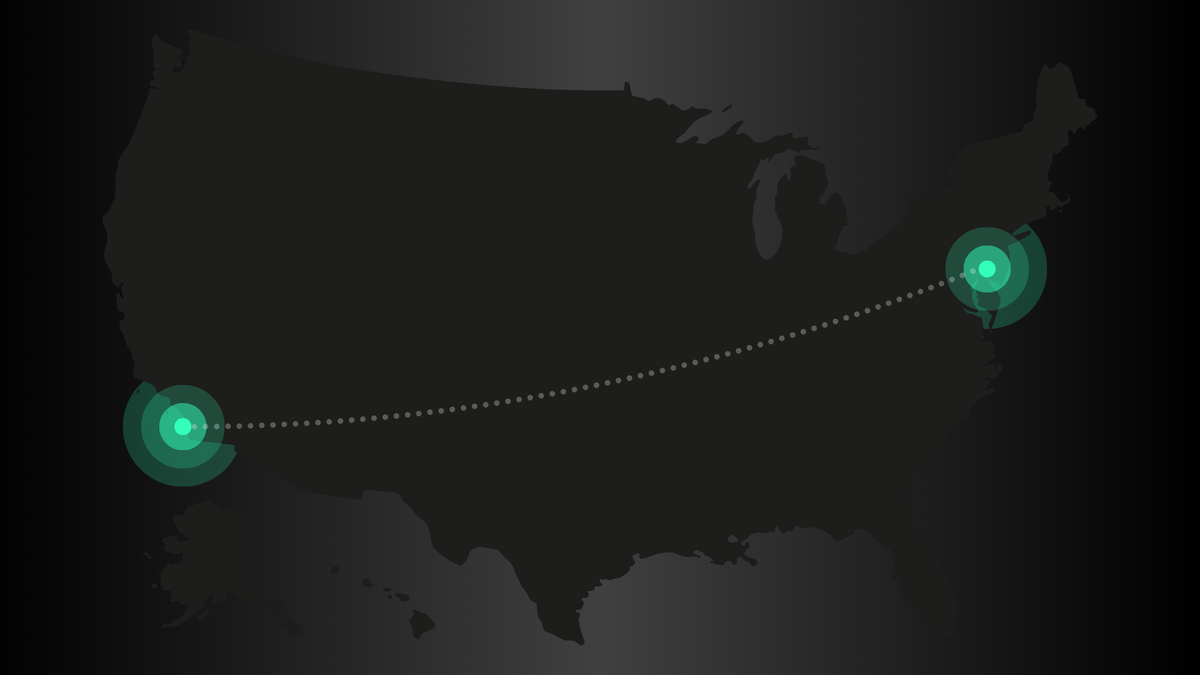
Patrick Zonta and Adam Preski spent Tuesday and Wednesday on the floor in San Diego, at the IMN conference built around the middle market. The very next day, Rachel Gammons sat in a room in New York, at the IMN conference built for CFOs and COOs. Same week, one day apart, two audiences that sounded nothing alike. This isn't a forecast, we're not going to tell you where rates go from here. It's a report on what we heard when we were actually in the rooms.
New York opened with the numbers: a labor market that's gone tepid, so whatever growth shows up will come from investment rather than jobs, and construction starting at its slowest pace since 2012, with supply staying tight because of it. That's not our read, it's the room's, and it set the tone for a conference that spent the rest of its time on what to do inside that reality rather than when it might change.
What stood out was how specific this audience already is. One developer on an AI panel talked about the hardest part of his job, sourcing opportunities, and the scoring model he'd built himself to help: site layout, entitlement risk, labor and infrastructure cost, all in one place. Panel after panel arrived at the same complaint from different directions: the ERP system holds a piece of the answer, but finance answers are never all in one place. And panel after panel arrived at the same fix, independently: a data warehouse, a dictionary that gives it context, and only then something built on top of it. That's a room that has already done the thinking most vendors are still trying to explain to their prospects.
The AI stories that got real traction were specific: a covenant calculator that freed up significant time, an underwriting tool that let one team see more deals without adding headcount, in-house reporting tools built well enough that one shop's leadership said, plainly, we can do that for everything. But what came through even more than the tools was the discipline around them. Operational leaders kept returning to the same point: adopt something because it does a specific job well, not because it's AI. Make sure the rollout has continuity, so one team isn't three tools ahead of the rest of the organization. And keep a person accountable for the judgment call at the end, using a tool well and outsourcing the decision to it are not the same thing. That's an audience that has moved past asking whether to use AI, and is now being careful, deliberately, about how.
Even with all that sophistication, the fatigue was there too, just wearing different clothes than it does out west: too many systems, too many logins, too much of the day spent moving information instead of using it. One presenter's line stuck: AI is not a strategy, the real work underneath it is change management. And when one COO was asked whether she trusted an AI tool's citations, she didn't hesitate: "I don't trust anyone. I'm a New Yorker."
San Diego, one day earlier, sounded like a different market entirely. It wasn't. The room was in a city that was, per usual, gorgeous and sunny; the mood in it was not. Mingling with the crowd, the feeling was clear: whatever burst of post-pandemic, everyone's-buying-again energy had carried the last few conference seasons was gone. Acquisitions in the middle market (at least in California) haven’t come back, and it's not for lack of sellers or because the capital disappeared, it's because the math doesn't pencil. Leverage has gone negative on a meaningful share of the deals buyers are underwriting, and there's a lot of pent-up energy in the room with nowhere to go yet.
The word that mattered most in that room was basis, what a deal actually pencils to once factoring in purchase price, improvements and closing costs. Not "the market's soft." Basis. With pricing still anchored to elevated levels, and the rising cost of debt, deals just don’t have the spread to attract investors, which continues to plague the value-add space and keep people on the sidelines. Naming the specific thing, instead of gesturing at the general mood, is what told us this room was serious. That same room was also tired of being pitched, tired enough that people half-joked about wanting one tool that could do everything, and tired enough to know, saying it, that no such tool exists. That's not really a request. That's what exhaustion sounds like when it's looking for a shortcut.
It's also why the AI pitch that has worked at conferences for two years landed differently here. Nobody in that room was asking whether a tool is smart. They were asking whether it pays for itself, and how fast. The conversations that went somewhere were about a duplicate invoice caught before it cleared, an anomaly in a rent roll flagged before it became a write-off: specific, countable dollars back on the bottom line.
Two rooms, two coasts, two moods that sound like opposites: one confidently building its own tools, the other too tired to sit through another vendor slide. Underneath, they're solving the same problem from opposite ends. The crowd in New York is optimizing a portfolio it already owns. The crowd in San Diego is protecting the basis on a deal it's already stuck with. Both are operating against a 10-year sitting at a level most active investors in either room have never had to underwrite through, with no sign yet that it's easing. Nobody in either room pretended to know when that changes, and neither will we. What both rooms agreed on is what to do about it in the meantime: when the dollars aren't free-flowing, measure twice and cut once. That starts with a standard you can count on, numbers that read the same whether they're coming from acquisitions, asset management, or the report going to the board.
That's not something one conference, or one vendor, solves outright. It's the work. It's also, not incidentally, the part symmetRE has spent its time on, not the whole answer, just a standard you can count on, so the rest of the decision gets easier to make.