Building the Standard: Why We Built symmetRE, and Why It's More Relevant Than Ever
Real estate doesn't have a software problem. It has a foundation problem. The story of two finance guys and a fintech architect who set out to fix it, and why the case is stronger now than when we started.

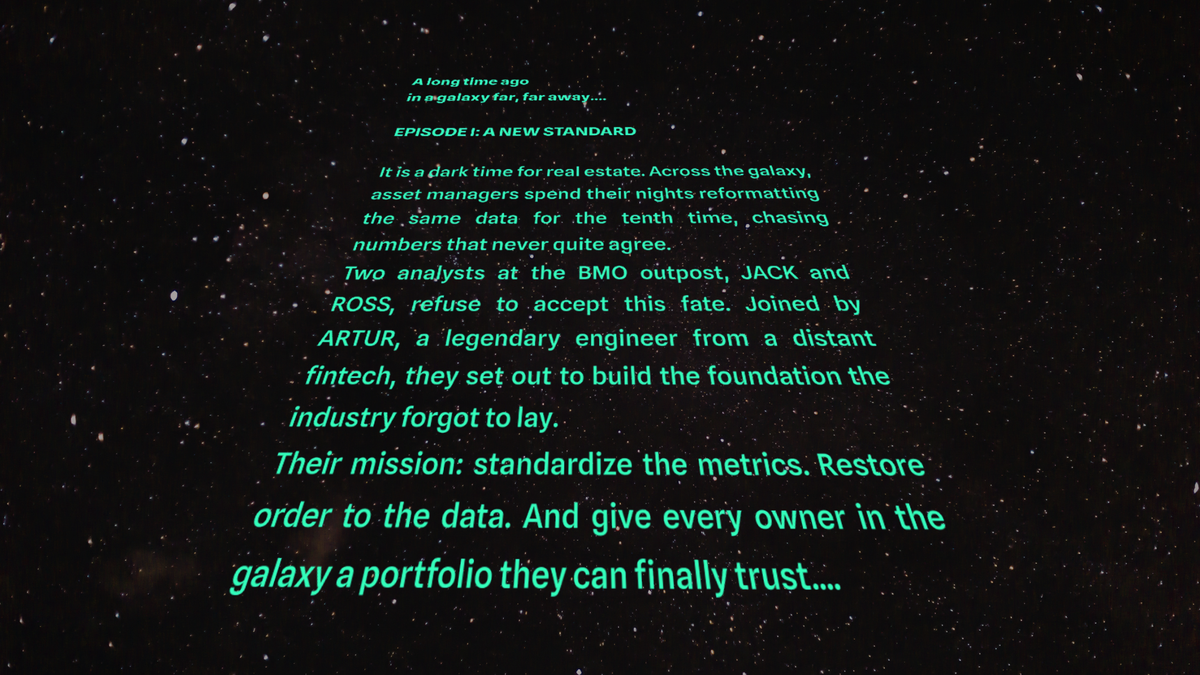
My first real “desk” job in real estate was a summer internship at a property management company. I was handed a login, pointed toward the company's ERP, and asked to start tracking budgets and operational metrics across the portfolio.
It took me almost the entire summer just to learn how to navigate the system.
Setting aside that I was nineteen and had no business opining on enterprise software, the thing that really stuck with me was the invoice. The company was paying hundreds of thousands a year for a system that felt like it had been frozen sometime in the mid-90s. It was slow. It was clunky. Half of it didn't work the way anyone expected it to. To make things worse, all of the data had to be massaged, reformatted, and reconciled before anyone could actually use it.
I assumed I was just an intern who didn't know enough yet. It turned out I was sitting inside an industry-wide problem I wouldn't fully recognize for years.
Meeting Ross, and realizing it wasn't just me
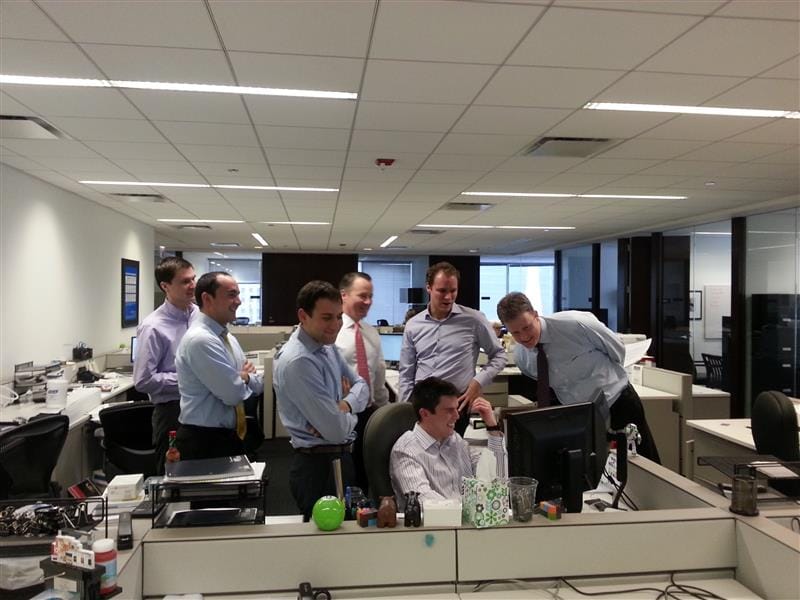
After school I landed at BMO Capital Markets as an investment banking analyst in the M&A group. That's where I met Ross Piermarini. Ross was in the Leveraged Finance group, predominately covering the bank's real estate clients.
Much of Ross's job, in practical terms, was to track down data from his clients and make it usable / digestable to sell the deal to the market (think corporate-level refinancings, recaps, leveraged buy-outs, etc.). Things that should’ve been readily available didn’t exist because property-level data was siloed and there was no true portfolio management layer. Asking the CFO of a REIT for the latest financials was like pulling teeth… “We’ll have to reach out to the property managers to get that”. Hundreds, if not thousands, of hours were wasted aggregating, standardizing, & ultimately reformatting data for all of the different use cases (models, investment memos, deal presentations, etc.). Every report that left his desk had been rebuilt from scratch.
Here is the thing about why Ross and I started symmetRE that I think gets lost. We are not two tech guys who saw an opportunity in real estate. We are two finance guys who lived the pain. We were the ones still at our desks at 11 pm on a Sunday, wasting time scraping together data and repurposing it for analytics. We weren't observing this problem from the outside…we were living it.
Finding our Architect
An idea is not a company. At some point you have to actually build the damn thing, and Ross and I were just dumb bankers. What we needed was someone who could translate lived pain into real architecture. That is where Artur comes in…
Artur came out of Avant ($1B+ fintech company), where he spent years building data infrastructure for operating at a scale and speed most real estate software has never had to deal with. What mattered more than his resume was the way he thought about the problem. He didn't look at what Ross and I were describing and see a reporting tool. He saw a data definition problem that had to be solved at the structural level before anything on top of it could be trusted.
The layer nobody was building
If you look at how a real estate owner actually operates, there's a gap that almost no software addresses head-on.
There's a leasing layer, a pricing layer, an accounting layer, a CRM layer, an underwriting layer, etc. But the place where asset managers actually live, the place where decisions about performance, strategy, and capital needs get made, doesn't really have a system of its own. It has spreadsheets that cobble together data from different systems. It has analysts. It has late nights & weekends.
The industry did not have a shortage of software. It had too much. What it didn't have was a shared foundation. A common way of defining, structuring, and trusting the data that every one of those tools was producing. Every team was solving it with elbow grease. Usually in Excel. Usually late.
We didn't want to build another tool that competed with the ones owners were already paying for. We wanted to build the layer underneath them.
And then the world got louder
There is certainly more software in the real estate stack than there was when we started this endeavor. There is more data. There are more dashboards, more BI tools, more vendors, and now a parade of AI products promising to turn fragmented information into clear answers. The pitch from the newest generation of tools is that if you feed enough data into the model, the model will figure it out.
Sounds cool and all, but…it won't.
This is the part I keep coming back to, and it's the part almost nobody wants to hear. You cannot throw a model on top of messy, inconsistently defined data and get a trustworthy answer. Before you add more data to the pile, you must cleanse the metrics you already have.
Take in-place rent. One team pulls it from financials as gross rent less vacancy. Another adjusts for concessions and model units. A third takes a weighted average off the rent roll. None of them are wrong in isolation. Put all three in the same portfolio and nobody can trust the roll-up. Now imagine asking an AI assistant "what's my in-place rent?" across a portfolio with three different definitions baked into three different systems. It's going to give you an answer. It's going to sound confident. You should absolutely not trust it.
This fundamental problem we set out to solve still hasn’t been addressed, and it matters more today than it did when we started this company. The tools keep improving. The stack keeps expanding. The foundation underneath it keeps getting skipped.
The Standard, in two senses
We describe symmetRE as the standard in asset management, and we mean two things at once.
The first is the obvious one. We are building a tool we believe should be the standard. The default piece of infrastructure every real estate owner runs on top of their stack.
The second is the one we spend our actual days on. symmetRE is the standardization layer for real estate data. We take the fragmented, inconsistently defined, vendor-dependent metrics that pour out of dozens of different systems and we put them into a single, consistent, trustworthy framework.
That is the unglamorous work. It is also the work that makes everything else worth doing. If your most important metrics haven't been cleansed, defined, and agreed on, every dashboard built on top of them is guessing, every report is a negotiation, and every AI answer is a gamble dressed up as an insight.
Ross, Artur, and I didn't start symmetRE because we thought real estate needed more software. We started it because we lived, for a combined decade-plus, inside the gap every asset manager knows. The one where the tools all work and the data still doesn't.
The case for closing it is stronger now than when we started.
About symmetRE
symmetRE is the standardization layer for real estate data. We help owners and asset management teams turn fragmented metrics from property management systems, BI tools, and reporting frameworks into a single, consistent, trustworthy view of the portfolio. The foundation everything else is built on.
If any of this sounds like a problem you're living, we'd like to talk. You can reach us at hello@symmetre.com or book time with the team directly here.